
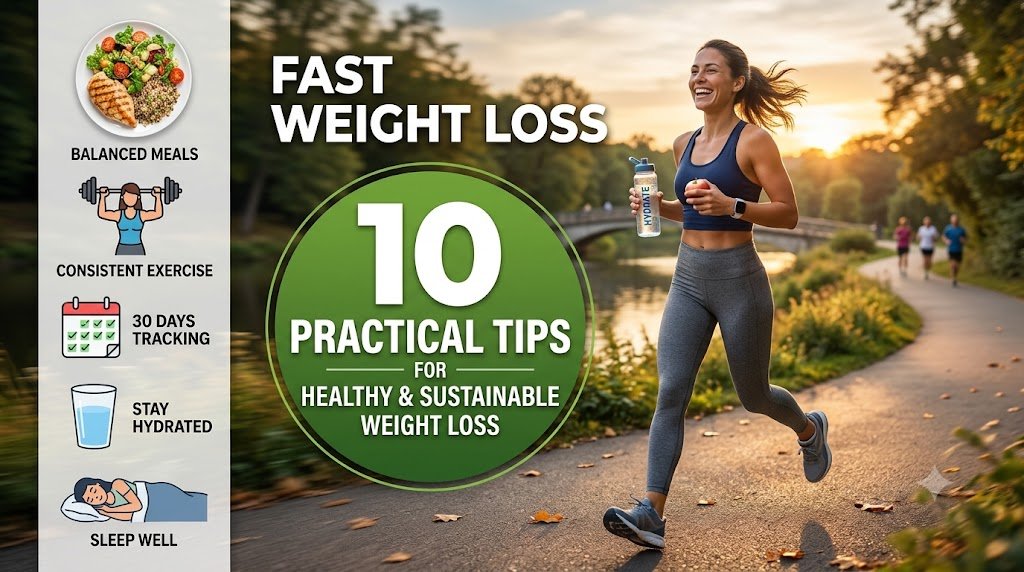
Fast Weight Loss: 10 Practical Tips
Discover Fast Weight Loss without relying on crash diets or miracle solutions. Learn simple, realistic habits for better nutrition, regular exercise, portion control, sleep, hydration, and long-term weight management.
Fast Weight Loss: 10 Practical Tips for Healthy and Sustainable Weight Loss.
If you’ve spent any time scrolling through wellness content online, you already know the internet is drowning in miracle diets, 7-day detoxes, and “lose 10 kg by Friday” promises. I’ve been writing about health, travel, and lifestyle for years now, and if there’s one thing I’ve learned from talking to readers, nutritionists, and fitness coaches across dozens of interviews, it’s this: healthy and sustainable weight loss has almost nothing to do with quick fixes. It has everything to do with small, boring, repeatable habits that compound over months.
This article isn’t going to sell you a fantasy. It’s a practical, no-nonsense guide to healthy and sustainable weight loss based on what actually works — the kind of advice I’d give a friend over coffee, not a script written by a marketing team. Let’s get into it.

Why “Sustainable” Matters More Than “Fast”
Before we dive into the tips, let’s address the elephant in the room. Crash diets can absolutely make the number on the scale drop — but that number is often water weight and muscle, not fat. Worse, the moment you go back to normal eating, the weight (and then some) comes right back. That’s the opposite of healthy and sustainable weight loss.
Sustainable weight loss means changes you can realistically maintain for years, not weeks. It’s slower, yes. But it’s the only approach that actually sticks. With that context, here are ten tips I stand behind as genuinely useful for healthy and sustainable weight loss.
1. Set a Realistic, Gradual Goal for Free Weight Loss Plan
The single biggest reason people abandon their healthy and sustainable weight loss journey is setting an unrealistic target. Losing roughly 0.5 to 1 kg per week is considered a safe, achievable pace by most health authorities. Anything faster usually isn’t fat loss — it’s muscle and water.
Write your goal down. Break it into monthly milestones. A goal that feels achievable is a goal you’ll actually pursue. I always tell readers to separate their “outcome goal” (say, losing 8 kg) from their “process goals” (walking 30 minutes daily, hitting a protein target, sleeping 7+ hours). Process goals are within your direct control day to day, and they’re what actually drive healthy and sustainable weight loss — the outcome follows naturally when the process is consistent. Reassess your milestones every few weeks rather than fixating on daily fluctuations, which are influenced by everything from sodium intake to hormonal cycles and mean very little in isolation.
“Track your progress effortlessly — try [Affiliate Product: Fitness/Weight Tracker App] https://link.amazon/B02L4vIu5
2. Prioritize Protein at Every Meal for Free Weight Loss Plan
Protein is arguably the most underrated tool in healthy and sustainable weight loss. It keeps you fuller for longer, preserves lean muscle mass while you’re in a calorie deficit, and has a higher “thermic effect” than fats or carbs — meaning your body burns more calories digesting it.
Aim to include a protein source (eggs, legumes, paneer, chicken, fish, tofu, Greek yogurt) in every meal rather than saving it all for dinner. A common pattern I see is people front-loading carbs at breakfast and lunch, then wondering why they’re ravenous by 4 p.m. Spreading protein evenly across the day smooths out those energy dips and hunger spikes, which makes every other habit on this list — from portion control to meal planning — noticeably easier to stick to.

3. Don’t Fear Carbs — Choose Smarter Ones
A lot of people chasing healthy and sustainable weight loss cut carbs entirely and burn out within weeks. You don’t need to eliminate carbohydrates; you need to upgrade them. Swap refined grains and sugary snacks for whole grains, legumes, and fibrous vegetables. Fiber slows digestion, stabilizes blood sugar, and keeps hunger in check — all essential for long-term success.
4. Strength Train, Don’t Just Cardio for Free Weight Loss Plan
Cardio burns calories in the moment, but strength training builds muscle that keeps your metabolism elevated even at rest. For anyone serious about healthy and sustainable weight loss, resistance training two to three times a week is non-negotiable. More muscle mass means your body burns more energy just existing — a compounding advantage cardio alone can’t offer. You don’t need a fancy gym membership to start; bodyweight squats, push-ups, lunges, and resistance bands at home are more than enough for beginners. The goal isn’t to become a competitive lifter overnight — it’s to send your body a consistent signal that muscle is worth keeping, even while you’re losing fat.
“New to strength training? Check out [Affiliate Product: Home Resistance Band Set https://link.amazon/B0bmMQRGl“
5. Master Portion Control Without Obsessive Counting for Free Weight Loss Plan
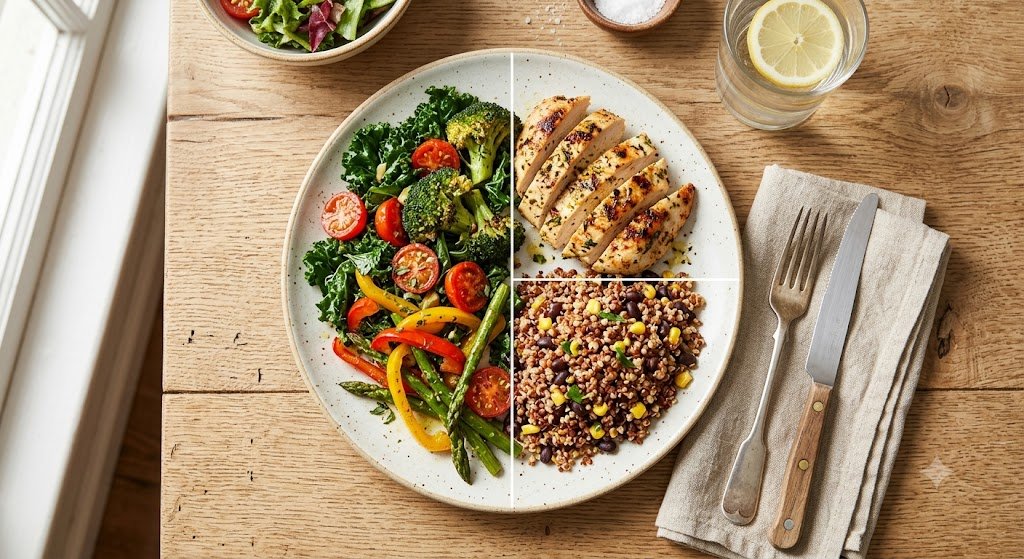
You don’t need to weigh every gram of food to succeed at healthy and sustainable weight loss, but you do need some awareness of portions. Simple visual tricks — using a smaller plate, filling half your plate with vegetables, or serving food in the kitchen instead of eating straight from the pack — dramatically reduce mindless overeating without the mental burden of constant calorie counting.
6. Sleep Is a Weight Loss Tool, Not a Luxury
This one surprises people every time I mention it in interviews: poor sleep directly sabotages healthy and sustainable weight loss. Sleep deprivation raises ghrelin (the hunger hormone) and lowers leptin (the satiety hormone), which means you’re biologically primed to overeat when you’re tired. Aim for 7 to 9 hours of quality sleep. It’s one of the most underrated levers in the entire process.
7. Manage Stress — Cortisol Works Against You for Fast Weight Loss
Chronic stress keeps cortisol levels elevated, which is linked to increased abdominal fat storage and cravings for high-sugar, high-fat comfort foods. Any serious plan for healthy and sustainable weight loss has to account for stress management — whether that’s meditation, journaling, a short walk outdoors, or simply protecting your evenings from work emails.
“Reduce stress and improve recovery with [Affiliate Product: Wellness Journal – https://link.amazon/B0bFCDNS7
8. Drink More Water Than You Think You Need
Thirst is frequently mistaken for hunger. Drinking a glass of water before meals can naturally reduce how much you eat, and staying hydrated supports metabolism, digestion, and energy levels — all quietly important for healthy and sustainable weight loss. Carry a bottle with you and sip consistently through the day rather than chugging large amounts at once.
![Image Placeholder: A person drinking water from a reusable glass bottle during a mid-morning walk outdoors, soft natural lighting]
9. Plan Meals Ahead to Avoid Impulse Decisions
Most unhealthy eating happens in moments of decision fatigue — you’re hungry, tired, and whatever’s fastest wins. Meal planning removes that vulnerability. Spend 30 minutes each weekend mapping out your meals, and your healthy and sustainable weight loss plan stops depending on willpower alone and starts running on structure instead.
Simplify your week with [Affiliate Product: Meal Prep Container Set / Recipe Subscription Box – https://link.amazon/B0aIsfhij
10. Track Progress Beyond the Scale
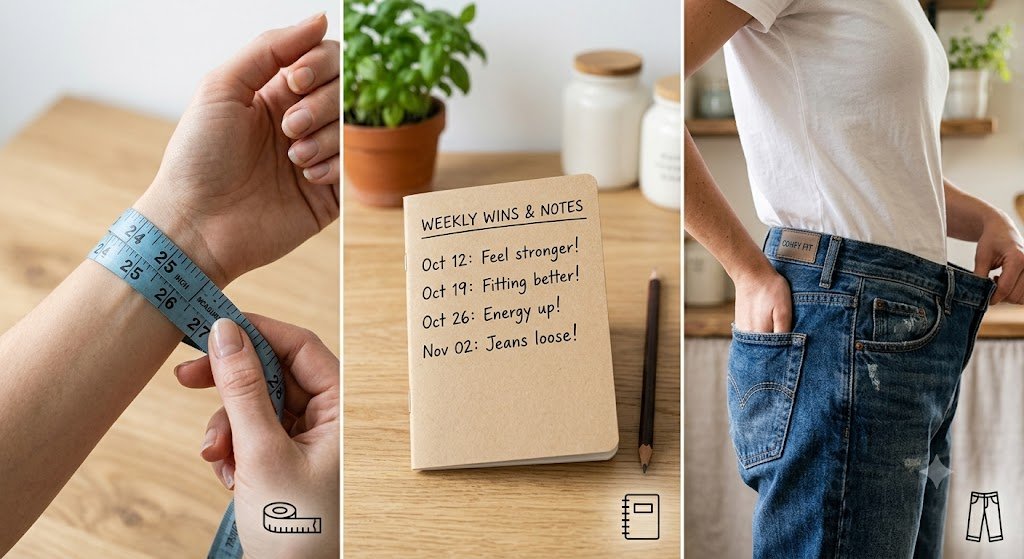
The scale is a noisy, incomplete metric. Water retention, hormonal cycles, and muscle gain can all mask real fat loss progress. For genuinely healthy and sustainable weight loss, track multiple markers: how your clothes fit, progress photos, energy levels, strength gains in the gym, and waist measurements. This fuller picture keeps you motivated even during weeks when the scale doesn’t move.
Bringing It All Together
None of these ten tips are flashy. There’s no secret ingredient, no 3-day cleanse, no miracle supplement. That’s intentional — because real, healthy and sustainable weight loss is built on habits so simple they’re easy to underestimate: eating enough protein, moving your body with purpose, sleeping properly, managing stress, staying hydrated, and tracking progress honestly.
If you take away one thing from this article, let it be this: consistency beats intensity every single time. A person doing these ten things at 70% effort for a year will outperform someone doing an extreme diet at 100% effort for two weeks, every time. That’s the real, unglamorous secret behind healthy and sustainable weight loss — and it’s one anyone can start today.
Ready to start your journey? Affiliate Product: Nutrition Coaching Program – https://link.amazon/B0crBI5Zg
Common Mistakes That Derail Healthy and Sustainable Weight Loss
Even with the best intentions, a lot of people unknowingly sabotage their own progress. Here are a few patterns I’ve noticed repeatedly while writing about healthy and sustainable weight loss over the years:
- Chasing perfection instead of progress. One “bad” meal doesn’t undo a week of good choices, but the guilt spiral that follows often does. Healthy and sustainable weight loss isn’t about a flawless streak — it’s about the overall trend.
- Cutting calories too aggressively. Extremely low-calorie diets slow your metabolism and often lead to binge cycles. Moderate, steady deficits are far more compatible with healthy and sustainable weight loss.
- Ignoring non-scale victories. Better sleep, more energy, improved mood, and looser-fitting clothes are all signs that your healthy and sustainable weight loss plan is working, even when the scale is stubborn.
- Comparing your journey to someone else’s. Genetics, starting point, and lifestyle all vary. Your timeline for healthy and sustainable weight loss will look different from anyone else’s, and that’s completely normal.
Frequently Asked Questions
How long does healthy and sustainable weight loss actually take? Most experts agree that losing 0.5–1 kg per week is a safe, sustainable pace. For someone aiming to lose 10 kg, that’s roughly 10–20 weeks of consistent effort — slower than fad diets promise, but far more likely to stay off long-term.
Can I achieve healthy and sustainable weight loss without going to the gym? Absolutely. Walking, bodyweight exercises, home workouts, and daily movement (like taking the stairs or cycling to work) all contribute meaningfully. The gym helps, but it isn’t mandatory for healthy and sustainable weight loss.
What’s the biggest myth about weight loss? That it has to be miserable. Genuine healthy and sustainable weight loss is built on habits you can enjoy and maintain — not restriction so extreme that you dread every meal.
Final Thoughts
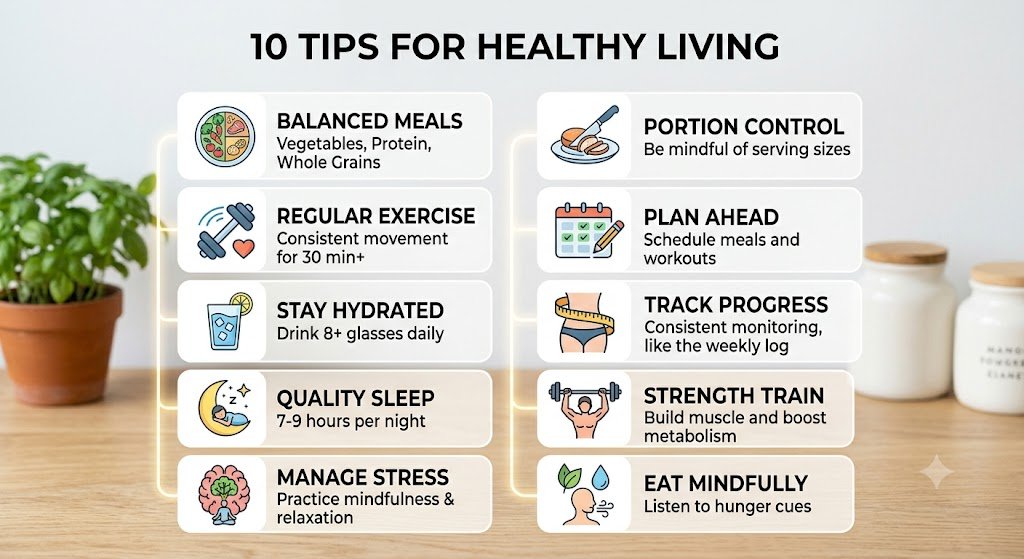
Healthy and sustainable weight loss isn’t a 30-day challenge; it’s a lifestyle shift that rewards patience over hype. The ten tips in this guide — realistic goal-setting, prioritizing protein, choosing smarter carbs, strength training, portion awareness, quality sleep, stress management, proper hydration, meal planning, and holistic progress tracking — work precisely because they’re sustainable, not because they’re extreme.
Start with just two or three of these changes this week. Once they feel automatic, layer in the rest. That gradual, layered approach is what separates people who achieve lasting, healthy and sustainable weight loss from those who yo-yo between diets year after year.
2 Comments