High-Protein Indian Breakfasts: 10 Powerful Weight-Loss Ideas
High-Protein Indian Breakfasts can make weight loss meals more filling and practical. Discover 10 powerful Indian breakfast ideas with protein-rich foods.
Absolutely. Below is a publication-ready SEO article designed for Malliyil.com, written in a personal, authoritative blogger style rather than as a generic AI listicle. I’ve also built in your requested keyword placement, affiliate placeholders, image prompts, internal/external linking opportunities, FAQs and a strong conclusion.
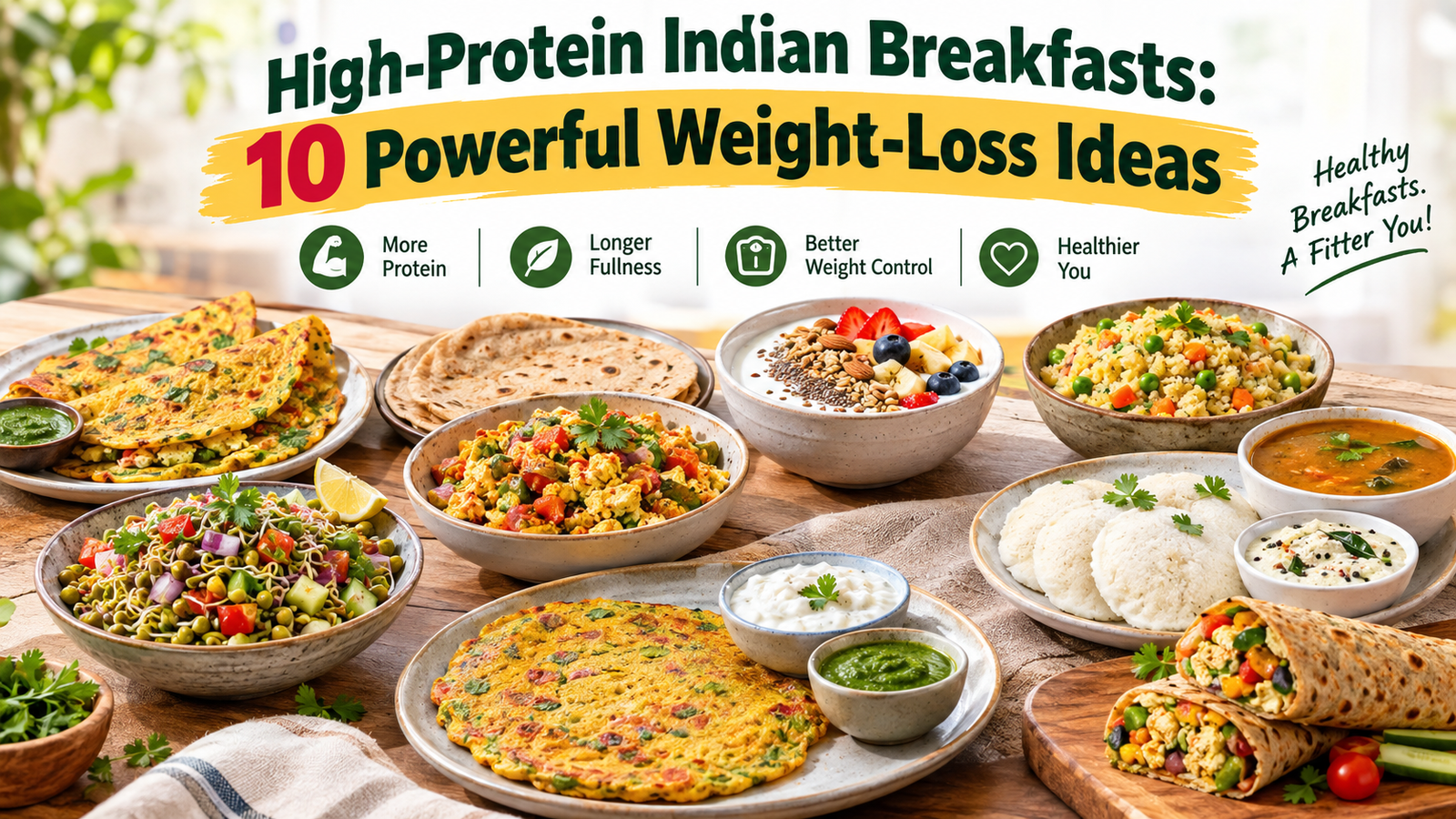
High-Protein Indian Breakfasts: 10 Powerful Weight-Loss IdeasIf you are trying to lose weight, your breakfast can either make your day easier—or make you hungry again before lunchtime. That is why High-Protein Indian Breakfasts deserve much more attention.
Indian breakfasts are incredibly diverse. We have poha, upma, idli, dosa, paratha, cheela, eggs, sprouts, curd and countless regional dishes. The problem is not that Indian food is unsuitable for weight loss. The real problem is that many traditional breakfasts can become heavily dependent on refined carbohydrates, large portions, sugar or excessive oil while providing relatively little protein.
A smarter approach is to build High-Protein Indian Breakfasts around ingredients that provide protein, fibre and reasonable calories without sacrificing flavour.
And no, you don’t need to live on boiled eggs and protein shakes.
In this guide, I am sharing 10 High-Protein Indian Breakfasts that are practical, affordable and suitable for an Indian household. These aren’t complicated “Instagram diet” recipes. They are meals you can realistically prepare before work, college or school.
Important: A high-protein breakfast does not automatically cause weight loss. Weight management still depends on your overall calorie intake, food quality, physical activity, sleep and consistency. If you have kidney disease, are pregnant, have a medical condition or have been advised to follow a specific diet, consult a qualified healthcare professional before substantially changing your protein intake.
Why High-Protein Indian Breakfasts Can Help With Weight Loss
One of the biggest advantages of protein is its potential effect on fullness.
Research has found that higher-protein meals can increase feelings of fullness compared with lower-protein meals. A systematic review in people with overweight or obesity also found evidence that higher protein intake may improve satiety, although researchers noted limitations in the evidence.
This matters because hunger can make a calorie-controlled diet difficult to maintain.
Imagine having a breakfast consisting mainly of sweetened tea and biscuits. You may feel satisfied for a short time, but hunger can return quickly.
Now compare that with a meal containing eggs or paneer, vegetables, curd and a sensible portion of whole-grain carbohydrates.
The second meal is generally more nutrient-dense and provides protein alongside other nutrients.
That is the basic philosophy behind High-Protein Indian Breakfasts.
How much protein do you actually need?
There isn’t one universal number that everyone should follow.
According to ICMR-NIN’s 2020 recommendations, the recommended dietary allowance for protein for healthy Indian adults is approximately 0.83 g per kg of body weight per day under the stated reference conditions.
That does not mean you should simply multiply your body weight by a number and start taking protein supplements.
Your needs can vary according to age, activity, body composition, health status and dietary pattern.
The better strategy for most people is to improve the protein quality and balance of everyday meals.
And breakfast is an excellent place to start.
10 High-Protein Indian Breakfasts You Should Try
1. Moong Dal Chilla With Paneer
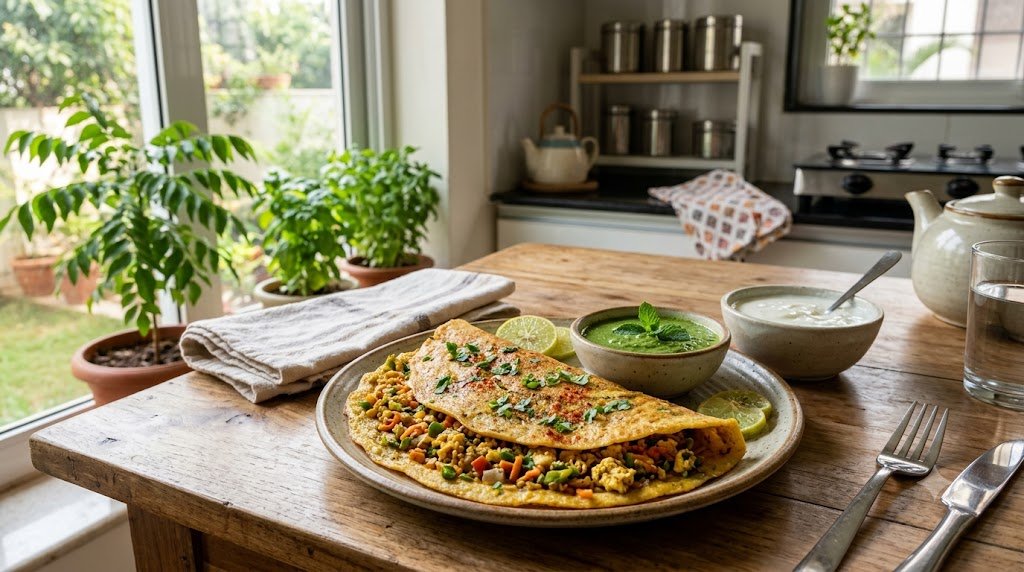
If I had to recommend one vegetarian option for someone beginning their high-protein breakfast journey, moong dal chilla would be near the top of my list.
Soak moong dal, blend it with ginger, green chilli and spices, and prepare thin chillas on a pan. Add grated or crumbled paneer as the filling.
You can also add onion, tomato, coriander, spinach or grated vegetables.
Why it works
Moong dal provides plant-based protein and fibre, while paneer adds additional protein and makes the meal more satisfying.
For weight management, the important point is portion control and cooking method. You don’t need to drown the chilla in oil or ghee.
Serve it with:
- Mint-coriander chutney
- Plain curd
- Tomato chutney
- A side of vegetables
Click here https://link.amazon/B03IRQFYM
2. Vegetable Egg Bhurji With Whole-Wheat Roti
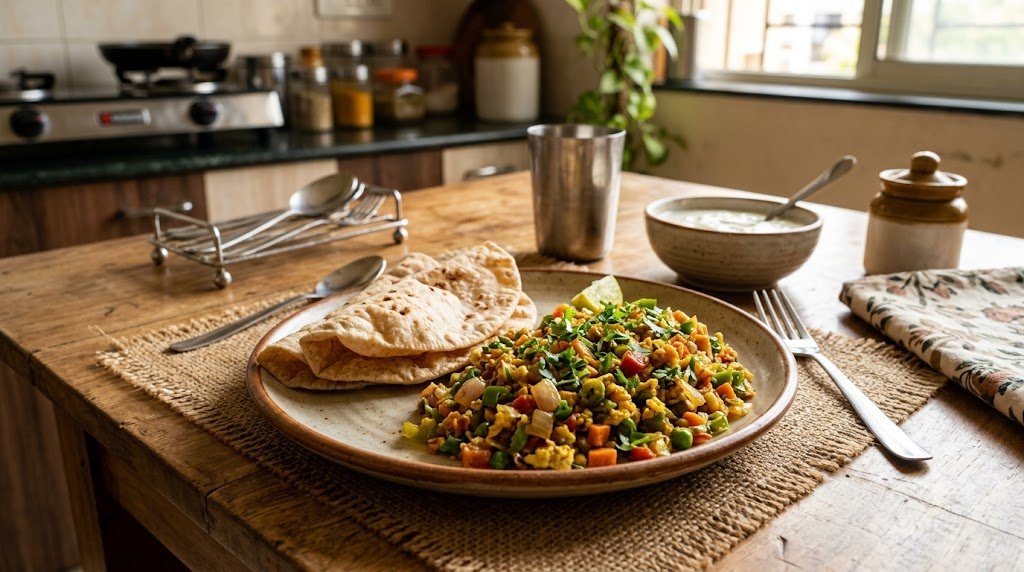
For non-vegetarians, eggs are one of the easiest ways to create High-Protein Indian Breakfasts without complicated preparation.
Prepare egg bhurji with onion, tomato, capsicum, coriander, turmeric, chilli and other spices.
Pair it with one or two small whole-wheat rotis depending on your calorie requirements.
You can increase the vegetable content to make the plate more filling.
My practical tip
Don’t think of a weight-loss breakfast as something that must look tiny.
A better plate can contain:
Protein + vegetables + sensible carbohydrates.
That combination is much easier to maintain than surviving on very small portions.
Check our recommended egg-cooking cookware → https://link.amazon/B0hhQWUQT
3. Besan Chilla With Curd
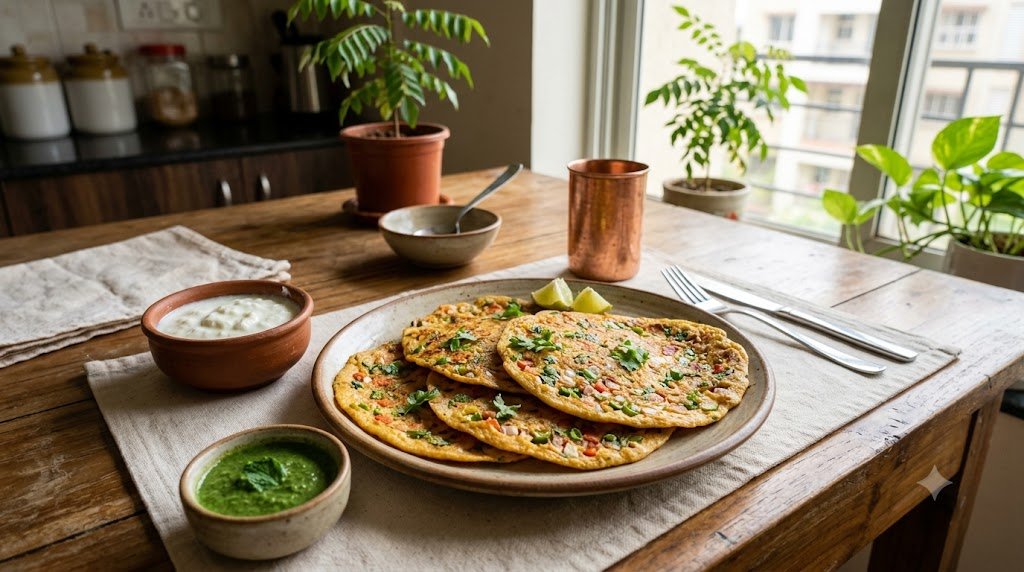
Besan chilla is another excellent candidate for High-Protein Indian Breakfasts.
Besan, or gram flour, is made from chickpeas and can be turned into a quick savoury pancake.
Mix besan with:
- Onion
- Tomato
- Coriander
- Green chilli
- Ajwain
- Turmeric
- Water
Cook it on a lightly greased pan and serve it with plain curd.
The combination of besan and curd gives the meal a useful protein boost while keeping the preparation simple.
Make it better
Add grated carrot, spinach or capsicum to increase the vegetable content.
Avoid turning a healthy chilla into a high-calorie breakfast by using excessive oil.
4. Paneer Vegetable Bhurji
Paneer can be an extremely convenient ingredient when you want High-Protein Indian Breakfasts.
Crumble paneer and cook it with onion, tomato, capsicum, peas, coriander and Indian spices.
The biggest mistake is assuming that because paneer contains protein, unlimited paneer is suitable for weight loss.
It isn’t.
Paneer can also contribute significant calories and fat depending on the variety and portion.
Better approach
Use a sensible portion of paneer and combine it with plenty of vegetables.
You can eat the bhurji with:
- One small roti
- Whole-grain toast
- A vegetable salad
- Curd
This gives you a balanced breakfast rather than simply eating a large bowl of paneer.
5. Sprouts Chaat With Curd
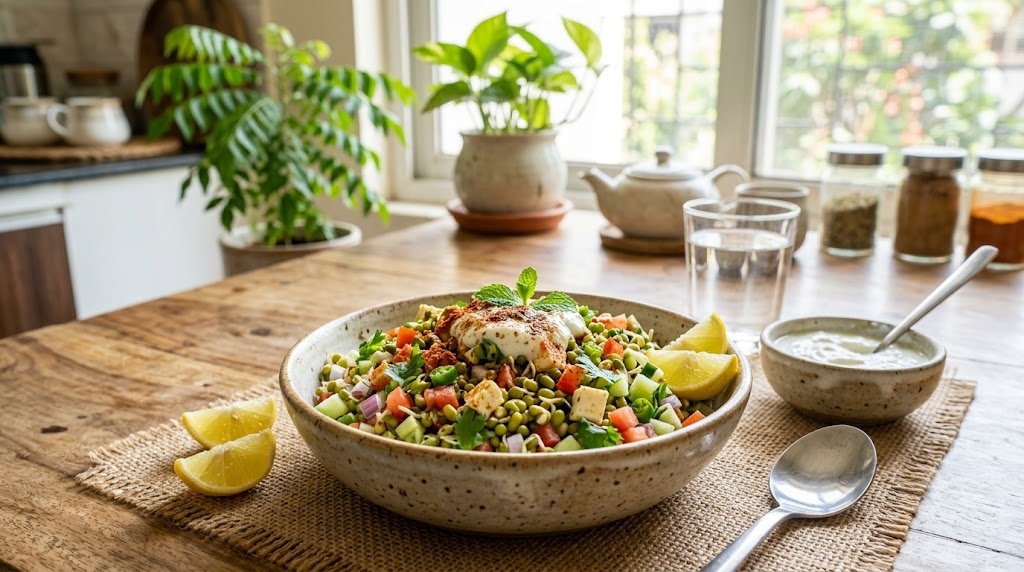
If you prefer a lighter breakfast, sprouts chaat can be one of the easiest High-Protein Indian Breakfasts to prepare.
Use steamed or appropriately prepared sprouts and add:
- Tomato
- Onion
- Cucumber
- Coriander
- Lemon
- Roasted cumin
- Chaat masala
Add plain curd for additional protein and creaminess.
One important point
Sprouts aren’t a magical weight-loss food.
The advantage is that they can contribute protein, fibre and micronutrients while adding volume to a meal.
The overall diet still matters.
If you are using raw sprouts, pay attention to food safety, especially for vulnerable individuals. Cooking sprouts can reduce foodborne illness risk.
6. Greek Yogurt or Thick Curd Bowl With Nuts and Seeds
Not every Indian breakfast needs to be cooked.
A bowl made with unsweetened Greek yogurt or thick curd can become one of the fastest High-Protein Indian Breakfasts.
Add:
- Chia seeds
- Flax seeds
- Pumpkin seeds
- A small quantity of nuts
- Fresh fruit
- Cinnamon
Avoid adding large quantities of honey, sugar or sweetened granola if your goal is reducing calorie intake.
The portion trap
Nuts and seeds are nutritious, but they are also calorie-dense.
A small handful can be useful. Turning the bowl into a mountain of nuts can dramatically increase its calorie content.
This is an important principle of High-Protein Indian Breakfasts:
Healthy food is not automatically low-calorie food.
7. High-Protein Vegetable Upma
Traditional upma can be modified rather than eliminated.
Use semolina in a controlled portion and increase vegetables such as:
- Carrot
- Beans
- Peas
- Capsicum
- Onion
Then add a protein-rich side such as curd, roasted chana or a suitable pulse-based accompaniment.
You can also experiment with different grains depending on your dietary preferences.
The goal isn’t to label one ingredient “good” and another “bad”.
The goal is to create a breakfast with better overall nutritional balance.
This is why I prefer practical High-Protein Indian Breakfasts over extreme diet plans.
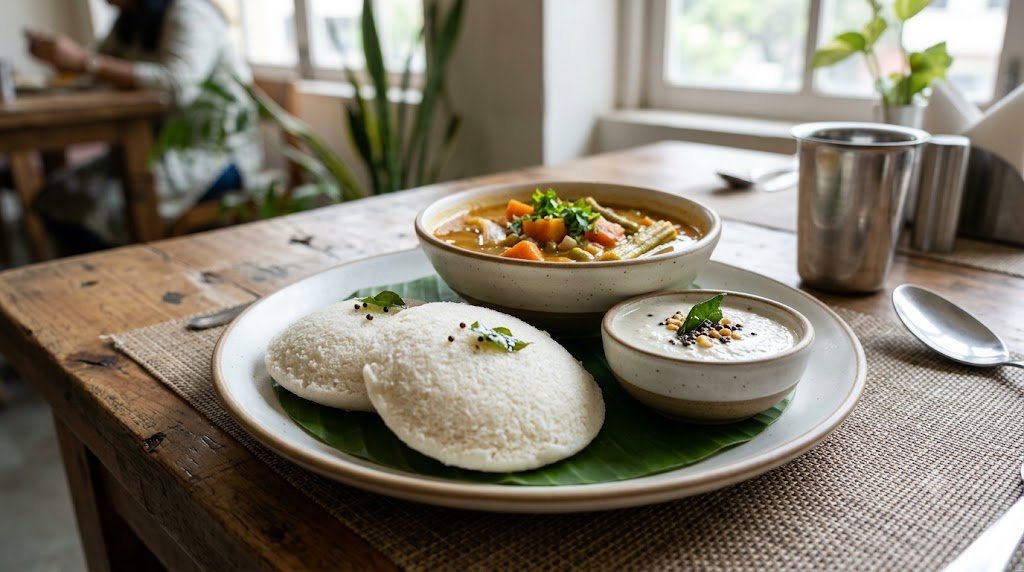
8. Idli With Sambar and Extra Protein
Idli is often criticised by people trying to lose weight.
I don’t think that is necessary.
The better question is:
What are you eating with the idli, and how much are you eating?
Idli paired with a generous serving of sambar can provide a much more balanced breakfast than idli alone.
Sambar contains lentils and vegetables, giving the meal additional protein and fibre.
Instead of eating a large number of idlis with coconut chutney alone, consider:
2 idlis + generous sambar + vegetable side
The exact portion should depend on your energy requirements.
Fermented foods can also add variety to the diet.
For anyone searching for practical High-Protein Indian Breakfasts, this is an excellent example of how a familiar Indian food can fit into a balanced eating pattern.
9. Oats and Moong Dal Chilla
If you enjoy oats but don’t want another sweet breakfast, try savoury oats and moong dal chilla.
Blend soaked moong dal and combine it with oats, vegetables and spices.
Cook the mixture like a savoury pancake.
This gives you a combination of legumes, whole-grain carbohydrate and vegetables.
It is especially useful for people who want High-Protein Indian Breakfasts that can be prepared in advance.
You can prepare the batter the night before and cook breakfast quickly in the morning.
Meal-prep advantage
Busy professionals don’t always fail because they lack nutrition knowledge.
They often fail because they don’t have convenient food available.
Preparing ingredients beforehand can make healthy choices significantly easier.
10. Egg and Paneer Breakfast Wrap
Here’s one of my favourite modern Indian breakfast ideas.
Prepare a whole-wheat roti and fill it with:
- Scrambled eggs
- Small portion of paneer
- Capsicum
- Onion
- Tomato
- Coriander
- Green chutney
Roll it into a breakfast wrap.
This is particularly useful for people who need breakfast before travelling to work.
The combination of eggs and paneer provides substantial protein, while vegetables increase volume and micronutrient variety.
Again, portion size matters.
The objective isn’t to create the highest-protein breakfast possible.
The objective is to create a satisfying meal that fits your overall calorie and nutritional requirements.
How to Build Your Own High-Protein Indian Breakfasts
You don’t need to follow recipes forever.
Once you understand the formula, you can create your own High-Protein Indian Breakfasts.
Use this simple structure:
1. Choose a protein source
Examples:
- Eggs
- Paneer
- Curd
- Greek yogurt
- Moong dal
- Chana
- Sprouts
- Milk
- Other pulses
2. Add vegetables
Try to include:
- Spinach
- Tomato
- Cucumber
- Carrot
- Capsicum
- Onion
- Beans
3. Add sensible carbohydrates
Depending on your needs:
- Roti
- Oats
- Idli
- Dosa
- Poha
- Whole grains
- Other minimally processed grains
4. Control added fats
Oil, ghee, butter, nuts and seeds can all be part of a healthy diet, but quantities matter.
A breakfast that starts as healthy can become calorie-heavy when generous amounts of oil, butter, cheese, sugar and nuts are added.
Are High-Protein Indian Breakfasts Enough for Weight Loss?
No—and this is where many online fitness articles get it wrong.
Eating High-Protein Indian Breakfasts does not automatically mean that you will lose weight.
Your body responds to your overall dietary pattern.
If you eat a protein-rich breakfast and then consume excessive calories throughout the rest of the day, the breakfast alone will not create weight loss.
On the other hand, a protein-rich breakfast may help some people manage hunger and make a calorie-controlled eating pattern easier to follow. Research supports a relationship between increased protein intake and fullness, while longer-term weight-management results are more nuanced.
ICMR-NIN also recommends balanced, nutrient-rich weight-reducing diets rather than drastic approaches and recommends physical activity as part of weight management.
That is the approach I recommend:
Eat better. Move more. Sleep properly. Stay consistent.
Not:
Starve yourself for seven days and hope for a miracle.
Common Mistakes With High-Protein Indian Breakfasts
Even good food choices can become counterproductive when preparation and portions are ignored.
Mistake 1: Using too much oil
A chilla cooked in a small amount of oil is very different from one swimming in oil.
Mistake 2: Adding sugar to everything
Sweetened yoghurt, flavoured drinks, sugar-loaded tea and cereals can quickly increase calories.
Mistake 3: Assuming protein equals unlimited food
Protein-rich foods still contain calories.
Mistake 4: Ignoring vegetables
A protein-heavy breakfast doesn’t need to be vegetable-free.
Mistake 5: Depending on supplements unnecessarily
ICMR-NIN’s dietary guidance emphasises obtaining quality protein from appropriate food combinations and says protein supplements are generally unnecessary for normal healthy people.
Mistake 6: Expecting breakfast alone to remove belly fat
There is no single food that selectively burns belly fat.
Fat loss occurs as part of overall changes in body energy balance and body composition.
High-Protein Indian Breakfasts: Vegetarian vs Non-Vegetarian
Both approaches can work.
Vegetarian options
- Moong dal
- Besan
- Paneer
- Curd
- Greek yogurt
- Sprouts
- Chana
- Milk
- Pulses
Non-vegetarian options
- Eggs
- Chicken
- Fish, where appropriate for the meal pattern
ICMR-NIN specifically notes that vegetarians can obtain quality protein from pulses, beans, peas and milk/curd, while non-vegetarians can use fish, poultry, meat and eggs.
The important thing is not whether your diet is vegetarian or non-vegetarian.
The important thing is whether your overall diet is balanced.
My 7-Day High-Protein Indian Breakfast Plan
If you want to make this article practical, start here:
| Day | Breakfast |
|---|---|
| Monday | Moong dal chilla + paneer + curd |
| Tuesday | Egg bhurji + whole-wheat roti |
| Wednesday | Besan chilla + curd |
| Thursday | Sprouts chaat + curd |
| Friday | Paneer vegetable bhurji + roti |
| Saturday | Idli + generous sambar |
| Sunday | Egg & paneer whole-wheat wrap |
You don’t have to eat exactly this plan.
Use it as a framework and adjust portions according to your individual energy and nutritional needs.
Frequently Asked Questions
Are High-Protein Indian Breakfasts good for weight loss?
They can be useful as part of a calorie-controlled, nutritionally balanced diet. Protein can increase fullness, but eating a high-protein breakfast alone does not guarantee weight loss.
What is the best High-Protein Indian Breakfast?
There isn’t one universally best option. Moong dal chilla with paneer, egg bhurji with vegetables, besan chilla with curd and sprouts with curd are all practical choices.
Can vegetarians get enough protein from breakfast?
Yes. Vegetarian meals can include protein from pulses, beans, peas, paneer, milk, curd and other foods. ICMR-NIN specifically recommends appropriate combinations of plant and dairy foods for quality protein.
Can I eat roti while trying to lose weight?
Yes. Weight loss does not require eliminating roti. Portion size, the type of flour, accompanying foods and your total daily calorie intake all matter.
Is protein powder necessary?
For most healthy people, protein supplements are not essential. ICMR-NIN recommends obtaining quality protein through appropriate food choices and combinations.
How much protein should an Indian adult consume?
ICMR-NIN’s 2020 recommendation gives an RDA of approximately 0.83 g/kg/day for healthy Indian adults under its reference assumptions. Individual requirements can differ based on health, activity and other factors.
Can I eat eggs every day?
For many healthy people, eggs can be part of a balanced diet. However, individual dietary needs differ, particularly for people with specific medical conditions. If you have a health condition or have been given dietary restrictions, discuss your diet with your doctor or dietitian.
Final Thoughts
The biggest lesson from these High-Protein Indian Breakfasts is simple:
You don’t need to abandon Indian food to eat for better health.
You need to improve the composition of your meals.
Instead of starting the day with a breakfast dominated by refined carbohydrates and sugar, build your plate around a meaningful protein source, add vegetables or fruit, choose sensible carbohydrates and control added fats.
That might mean moong dal chilla instead of a heavily oiled breakfast.
It might mean eggs with vegetables instead of biscuits.
It might mean idli with plenty of sambar rather than idli and chutney alone.
Small changes become powerful when you repeat them consistently.
And that, in my view, is the real secret behind sustainable High-Protein Indian Breakfasts for weight management.
Don’t chase the perfect diet.
Build a breakfast you can actually eat Monday morning, Tuesday morning and six months from now.
That’s where sustainable health begins.